Kardinaal Müller: katholieken kunnen de Reformatie niet vieren

Volgens de prefect van de Congregatie voor de Geloofsleer bestaat er geen enkele reden die een breuk met de Kerk van Rome kan rechtvaardigen.

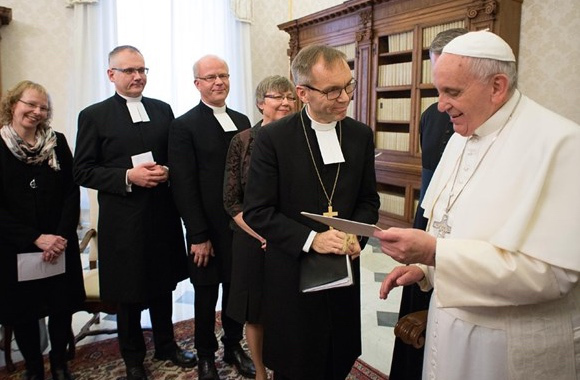
Kardinaal Gerhard Müller, de prefect van de Congregatie voor de Geloofsleer, legt in een uitvoerig interview in een nieuw boek uit dat er voor katholieken eigenlijk geen enkele reden bestaat om straks de 500ste verjaardag van Reformatie te vieren. Voor ons katholieken bestaat er geen enkele reden voor de viering van 31 oktober 1517, de dag die als het begin van de Reformatie en het schisma binnen de Westerse christenheid wordt beschouwd.

Op de Dag van de Reformatie, jaarlijks op 31 oktober, wordt herdacht dat Maarten Luther op diezelfde dag in 1517 een document stuurde naar de bisschoppen van Mainz en Maagdenburg waarin hij protesteerde tegen de verkoop van aflaten. Dat document ging de geschiedenis in als de 95 thesen van Maarten Luther. Kardinaal Müller, herinnert eraan dat Luther niet uit was op een breuk met de rooms-katholieke Kerk. Maar zijn 95 stellingen hebben wel ertoe bijgedragen dat hij in 1521 uiteindelijk werd geëxcommuniceerd.

Kardinaal Müller: Als we ervan overtuigd zijn dat de goddelijke openbaring integraal moet worden bewaard en dat die onveranderlijk blijft doorheen de Schrift en de traditie, in de sacramenten en in de hiërarchische structuren van de Kerk, dan kunnen wij niet aanvaarden dat er voldoende reden is voor een breuk met de Kerk.

Bron: Catholic Herald
https://www.kerknet.be/kerknet-redactie/nieuws/kardinaal-m%C3%BCller-katholieken-kunnen-de-reformatie-niet-vieren


Laudato si’ (I): Collateral considerations

Denzinger-Bergoglio's avatar

There are few images that so authentically and poetically reflect the relationship between God and mankind, as the shepherd and his flock. “I am the good shepherd, My sheep hear my voice; I know them, and they follow me” (Jn 10:14, 27). These unforgettable words of the Eternal Shepherd have instilled confidence and certainty in his sheep throughout the centuries. Yes, throughout all centuries, for the ‘echo’ of the voice of the Shepherd has consistently made itself heard among the faithful in different ways. Amongst these, an incomparable manner is, without doubt, through the Magisterium of the Church, which by the munus of teaching, projects the voice of the Divine Master for all time, leading the flock to fertile pastures and defending it from ferocious wolves. Even today, the ‘sheep’ know how to recognize who is speaking to them…

A short time ago Pope Francis published his second Encyclical. The…

View original post 252 woorden meer

Francis and the ‘Bread of Life’ discourse. Grave omissions and novel interpretations

Denzinger-Bergoglio's avatar

Last August, Francis commented on the famous ‘Bread of Life’ discourse narrated in the sixth chapter of the Gospel of Saint John.

The rich theological substance of this passage has always nourished the faith of Eucharistic adorers and inspired a greater understanding of the immense gift that Christ left us in the Sacrament of the Altar. Moreover, the profundity of these words of Christ was the point of departure for essential doctrinal considerations regarding the Eucharist. The unanimous consideration of this pronouncement as a prefigure of the Sacrament of the Altar, generated a treasury of commentaries made by popes, saints and doctors of the Church, founded on the clear and captivating words of Jesus: ‘I am the bread of life come down from heaven.’

The Protestants, on the other hand, make all kinds of efforts to interpret the words proclaimed by our Redeemer in the synagogue of Capharnaum as a…

View original post 218 woorden meer